sales@kavyapharma.com
 +91 – 7567426252
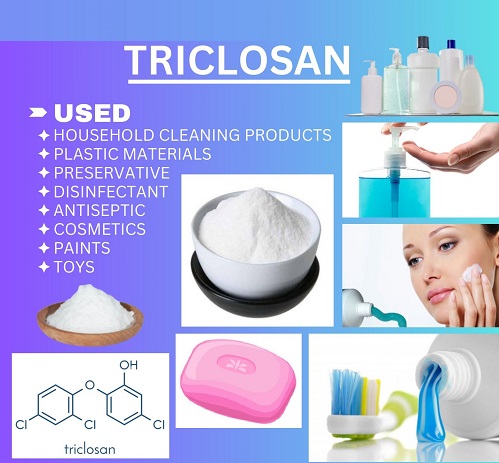
Triclosan USP CAS No: 3380-34-5
Triclosan is a broad-spectrum antimicrobial agent used in various consumer products. It is effective against bacteria, fungi, and some protozoa. It’s commonly found in antibacterial soaps, toothpaste, deodorants, and other personal care items. While it has been widely used for its antimicrobial properties, concerns exist regarding potential health and environmental risks, including antibiotic resistance and endocrine disruption.
Key Aspects of Triclosan:
Antimicrobial Properties:
Triclosan works by inhibiting the growth or killing microorganisms, including bacteria, fungi, and some protozoa.
Common Uses:
It’s a common ingredient in personal care products like soaps, toothpaste, and deodorants, as well as in household items like cleaning products and some textiles.
Mechanism of action
Triclosan is a biocidal compound with multiple targets in the cytoplasm and membrane. At lower concentrations, however, triclosan appears bacteriostatic and is seen to target bacteria mainly by inhibiting fatty acid synthesis. Triclosan binds to enoyl-acyl carrier protein reductase enzyme (ENR). This complex has increased affinity for NAD+ and forms a ternary complex. This complex is unable to participate in fatty acid synthesis, weakening the cell membrane and causing cell death. Humans do not have an ENR enzyme, and thus are not affected.
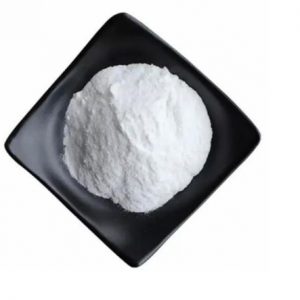
Apperance; fine whitish crystalline powder. melts at about 57degreec .